23. Cante Jondo Festival Posters
Back23. Cante Jondo Festival Posters
Audioguide
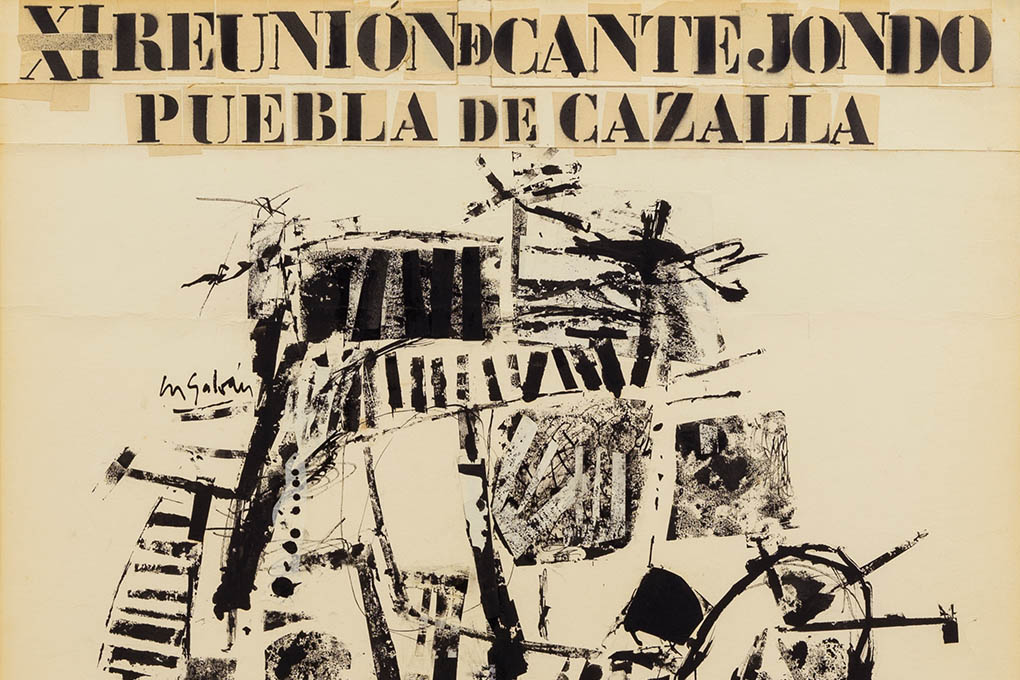
The idea for creating the Cante Jondo Festival in La Puebla de Cazalla arose in the house of artist Eduardo Carretero, in a meeting with the singer, José Menese, and Francisco Moreno Galván. Francisco oversaw the direction, the commission of the artistic casts, the scenery, and the festival's posters.
For Francisco Moreno Galván, flamenco is not only a musical discipline, but also a means of struggle and resistance. His lyrics address issues such as the poverty of the Andalusian peasant world or the repression of the Franco regime, in a metaphorical way to circumvent censorship.
We are looking at some of the original posters made by Francisco Moreno Galván for the Cante Jondo Festival. He elevated the posters to the rank of art. In them he captured his apprenticeship during his stay in Madrid. Cubism, collage, the informalist dramatism of black and white, and certainty of stroke characterize these compositions. Singing, dancing, women, the guitar, silence, are part of the cultural heritage of flamenco that Francisco Moreno Galván included in his painting, with which he traced the aesthetics of the "cante jondo" (deep song). He himself defined flamenco as follows:
"Flamenco is the most effective system to penetrate the heart of man. No other art form can capture the reality and rawness of life as flamenco. It is tenderness and courage, despair and hope, flourishing, living, and dying at the same time. It is the most beautiful way to denounce, to protest. That is why flamenco is above all rage. You can't sing well if you don't sing with rage."