17. Francisco Moreno Galván
Back17. Francisco Moreno Galván
Audioguide
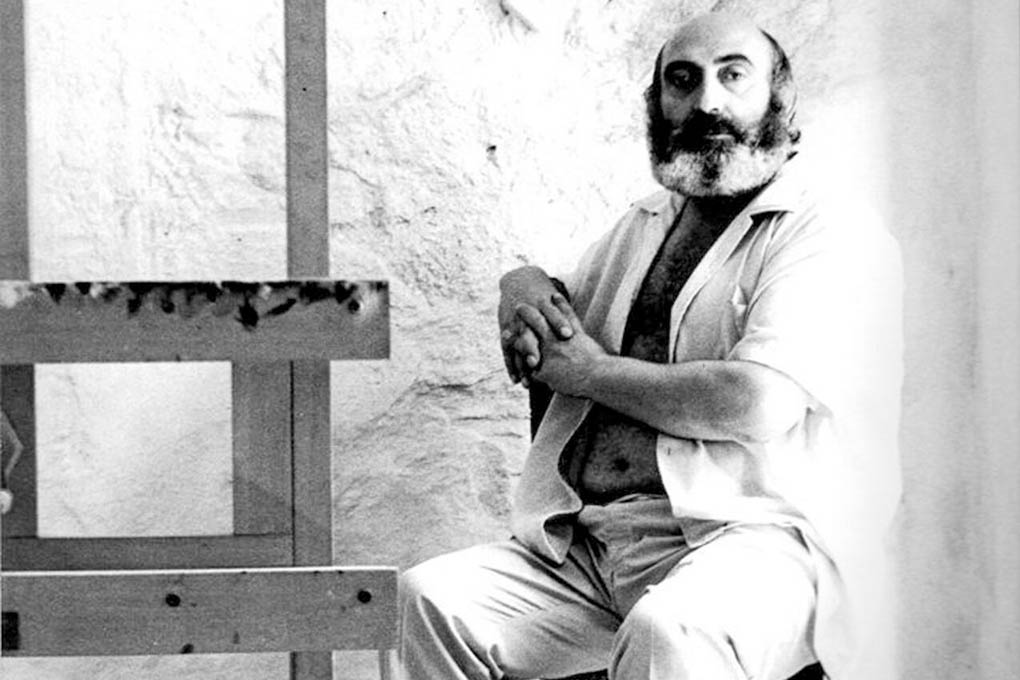
Francisco Moreno Galván was born in 1925 in La Puebla de Cazalla, Seville, where he was distinguished as a native son. He was a painter, poet, composer of flamenco lyrics, and even left an important influence on the architecture of his town through his urban designs. He also created book covers and paintings for films produced in the United States, such as El Cid and Lawrence of Arabia. But it is his orientation towards flamenco that determined the destiny of his plastic work and his life's destiny.
Trained at the School of Arts and Crafts and the School of Fine Arts in Seville, it was in Madrid where he came into contact with Spanish avant-garde and post-avant-garde art. In his work we can observe shades of neo-cubism during the fifties, which subsequently lead to lyrical expressionism.
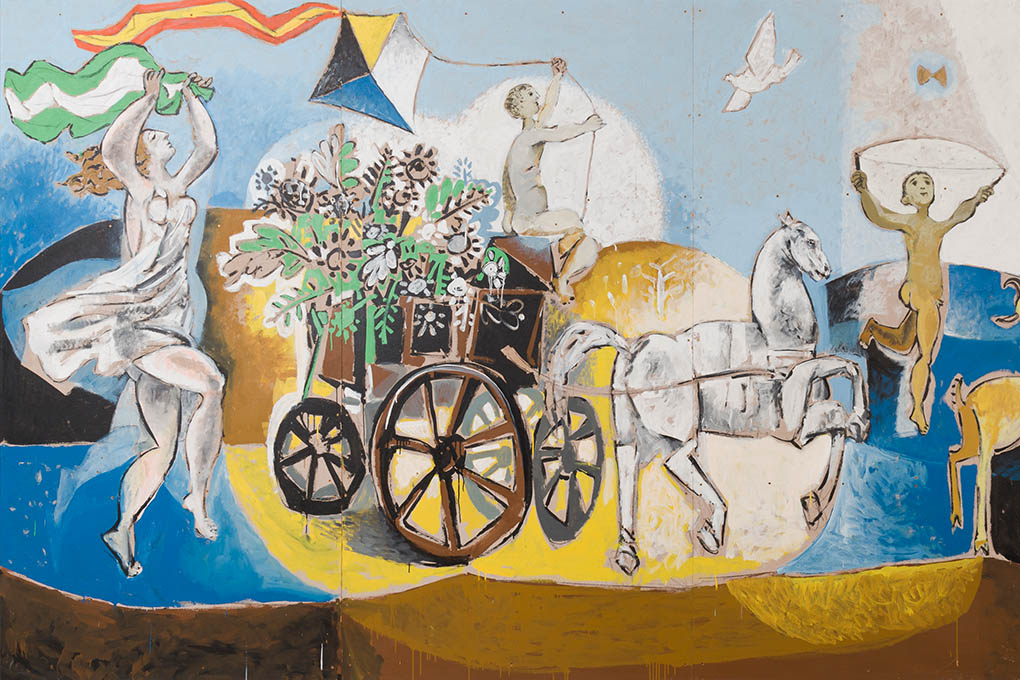
In the piece The Freedom Chariot, we observe traits that identify the artist. As a militant of the communist party, he created this large-format work to be exhibited in the streets during the party's campaign for the municipal elections of 1983. Picasso's imprint can be glimpsed in his figures. The countryside, freedom, equality, and peace, ideals that Francisco and his brother José María always defended, are represented.